PHP and Node.js: Remote Code Execution Flaws, October 2026
PHP and Node.js closed flaws that can let someone run code on your server from afar. See what it means, which versions are safe, and what to do today.
Read the article →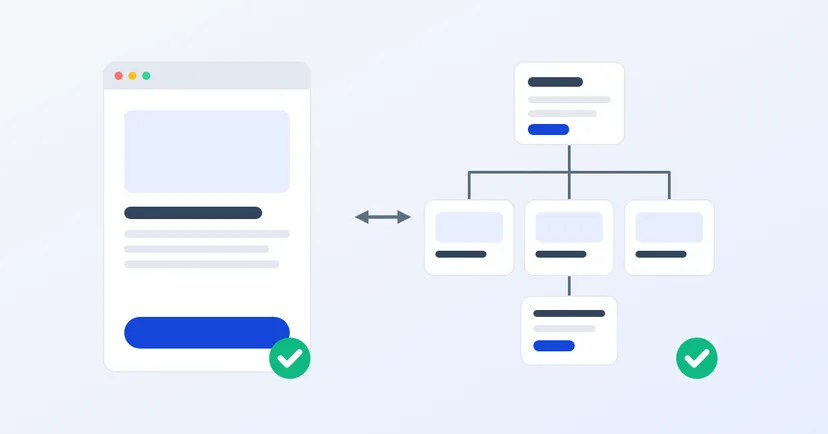
You want to run ads for one product line, or you have just started a business and need something to link to from WhatsApp and Instagram. Then comes the offer: "Just make a landing page, it's faster and cheaper." That offer makes sense. The question is whether one page is really enough for your business, or whether you will end up rebuilding from scratch later.
The answer depends on what buyers need to see before they contact you. This article helps you decide, without the jargon.
A landing page is a single page with a single goal. It focuses on one offer, such as one product, one promotion or one event, and ends with one clear call to action: fill in a form, call or chat. There is no menu inviting visitors to wander off.
A company website is a set of linked pages: company profile, products or services, projects, articles and contact. Its goal is broader. Buyers can browse on their own, compare, and check whether your company deserves their trust.
Neither is simply better. They are tools for different jobs. The usual problem is using the wrong tool: a landing page forced to hold every product, or ads that send people to the website's home page, so visitors have to hunt for the product they just saw in the ad.
A landing page fits when you really have one message and buyers don't need much research before contacting you. For example:
For most manufacturers, distributors and B2B companies, one page soon feels cramped. The signs:
Google also advises site owners to make it easy for readers to find out who is behind the content, for example through an About page. On a landing page there is usually no room for this.
Read also: company profile or product catalogue website: which one you need.
If you advertise on Google Ads, Google rates the experience on the page your ad leads to. Google Ads guidance gives a few pointers that apply to ads elsewhere too:
Many companies end up using both. The company website is the permanent home: profile, catalogue, contact and articles. For each ad campaign, a landing page is created inside the same website, for example at an address like /promo/product-name/.
This has several advantages. Visitors from an ad who want to know more can still look at the company profile. You only maintain one domain, one CMS and one place to measure results. When the campaign ends, the page can be archived without touching the main website.
If your budget only stretches to one page for now, that is fine. Just make sure the page is built on a platform where more pages can be added later, so you don't have to start from zero. Use your own domain from the start, not the platform's default address, so links already printed on business cards and brochures keep working as the website grows.
If most of your answers point to "many", "checked first" and "for years", a company website is the better fit. If they point to "one", "from ads" and "short period", a landing page is enough.
A landing page is good for one message. A company website is good for buyers who want to check before they trust.
Still unsure which suits you? See our website services, or first read how much a company website costs so you can weigh it against your budget.
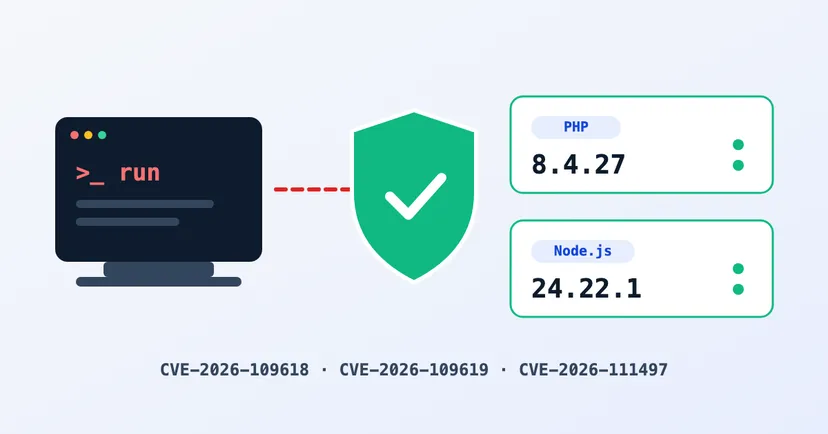
PHP and Node.js closed flaws that can let someone run code on your server from afar. See what it means, which versions are safe, and what to do today.
Read the article →
How to measure your company website's results with Google Analytics 4 and Google Search Console: visitors, traffic sources, keywords and quote requests.
Read the article →