How Much Does a Company Website Cost? The Factors That Decide the Price
Quotes for a company website can vary widely. Learn what drives the price and the running costs that are often forgotten before you choose a quotation.
Read the article →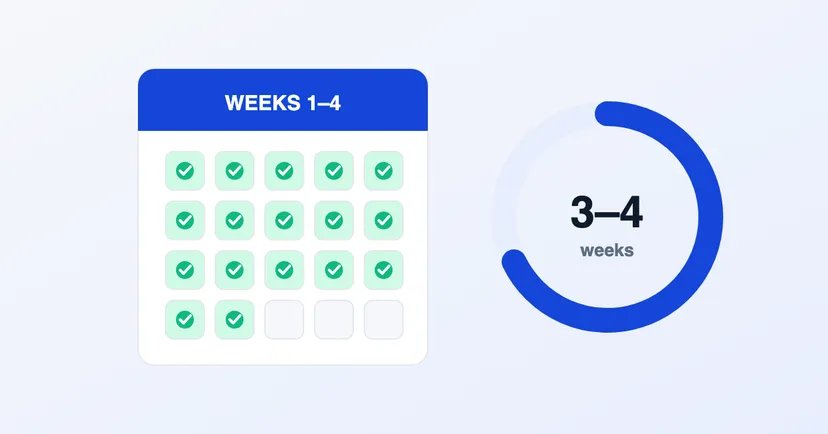
One of the first questions when planning a new website is: how long until it can be used? The answer depends on the size of the website, the features you need and, often overlooked, how ready your own company's material is.
For a company website with a CMS, the process generally takes 3–4 weeks. This article explains what happens during that time, what makes it faster or slower, and how to make sure your website is finished on time.
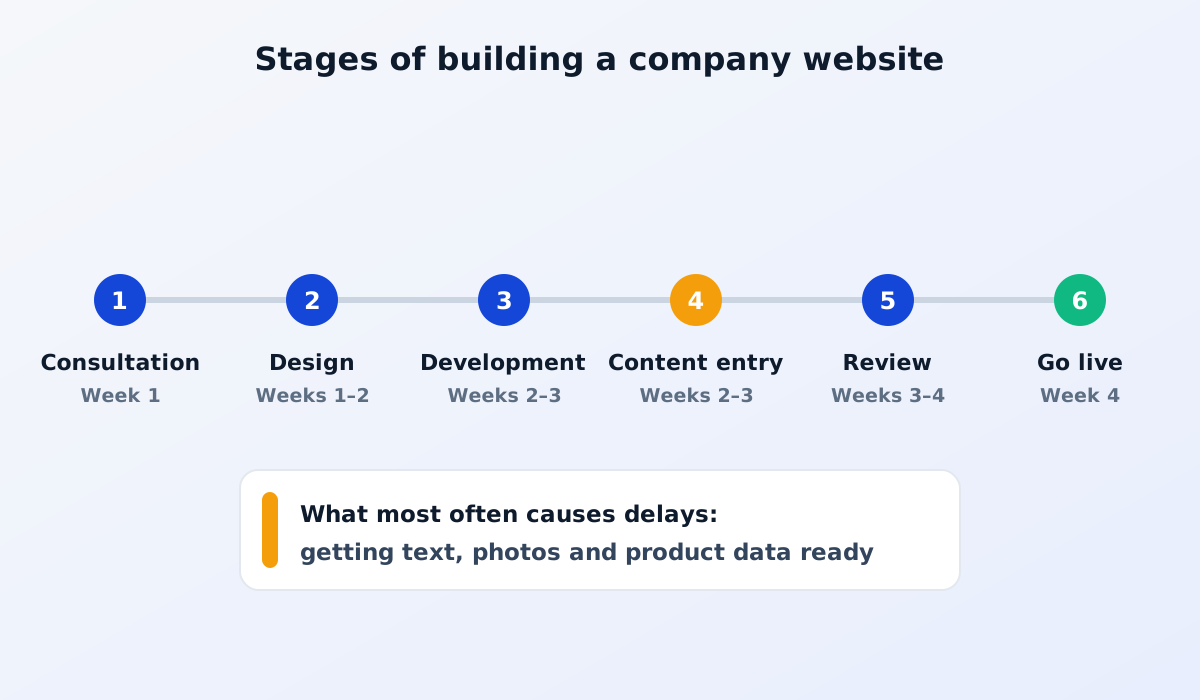
The first stage is understanding your business: what you offer, who your customers are and what the website is for. This stage also settles which pages are needed, how many languages and which features, such as a request-for-quote form or a product catalogue.
Careful planning saves a lot of time later on, because major changes halfway through are the most common cause of delays.
Based on your brand identity, designs are created for the main pages. You review them and give feedback. There are usually a few rounds of revision until the design is approved.
Once the design is approved, the website is built: the pages are put together, the CMS is set up, and features such as forms and visitor tracking are installed. This stage also covers basic SEO settings, such as page titles, descriptions and the sitemap.
Text, photos and product data are entered into the website. For a catalogue website with many products, this stage can take a while. It is also the stage that depends most on how ready your material is.
The website is checked together on different devices: computer, tablet and phone. Links, forms and layout are checked one by one. Small mistakes are fixed before launch. For what most often gets missed on phones, see your company website on a phone.
The website is launched on your domain. After that, your team gets a short training session on managing content through the CMS.
A 10-page website will naturally be finished sooner than one with a catalogue of hundreds of products. Every product needs photos, a description and specifications to be entered and checked.
A multilingual website needs extra time to prepare and check each language version. Translations that aren't ready are a frequent cause of delays.
Each stage needs approval from your company. If approval has to pass through several people or wait for a meeting, the timeline can stretch.
This is the biggest factor. Many website projects are technically finished on time but held up because the text hasn't been written, the product photos haven't been taken or the product data hasn't been gathered.
If you have a deadline, for example a trade show or a product launch, say so at the start. There is usually a way to adapt, such as launching a first version with the main pages and completing the catalogue afterwards. What matters is agreeing the plan and priorities from the start.
The work doesn't stop at launch. The first few weeks are a good time to check that the forms work, that your team is comfortable using the CMS, and whether any content needs filling in. A website that keeps being updated is also favoured by Google.
Every project is different, but the following gives a rough guide:
For a company website with a CMS, most projects are finished in 3–4 weeks when material and approvals flow smoothly.
Building a website is a collaboration. The provider handles the design and technical work, while your company brings knowledge of the business, the products and the customers. Things usually needed from you:
The faster each of these steps moves, the sooner your website is ready to use.
Yes. The website can launch with the main pages and products first, then your team completes it in stages through the CMS.
Major changes, such as adding a new type of page or changing the catalogue structure, usually need extra time. That is why planning at the start matters so much. Write the scope and timeline into the website development contract.
How long a website takes depends more on how ready the material is and how quickly decisions are made than on the technical work.
Want to know what affects the cost? Read how much a company website costs, or see our website services.
Quotes for a company website can vary widely. Learn what drives the price and the running costs that are often forgotten before you choose a quotation.
Read the article →
The basic steps for keeping a company website secure: HTTPS, regular updates, strong passwords and 2FA, user access rights, backups and protection from spam.
Read the article →