How Much Does a Company Website Cost? The Factors That Decide the Price
Quotes for a company website can vary widely. Learn what drives the price and the running costs that are often forgotten before you choose a quotation.
Read the article →
Many companies ask: do we still need a website if we are already active on social media? For businesses that sell to other companies (B2B), the answer is almost always yes. Social media and a website are not substitutes for each other. They play different roles and work best when used together.
Social media excels at reaching new people and keeping your company visible. Posts about your latest projects, your production process or company activities help build brand awareness.
However, social media has limitations for B2B businesses:
A website is an asset your company fully owns. On your website, you decide what is shown and how it is presented.
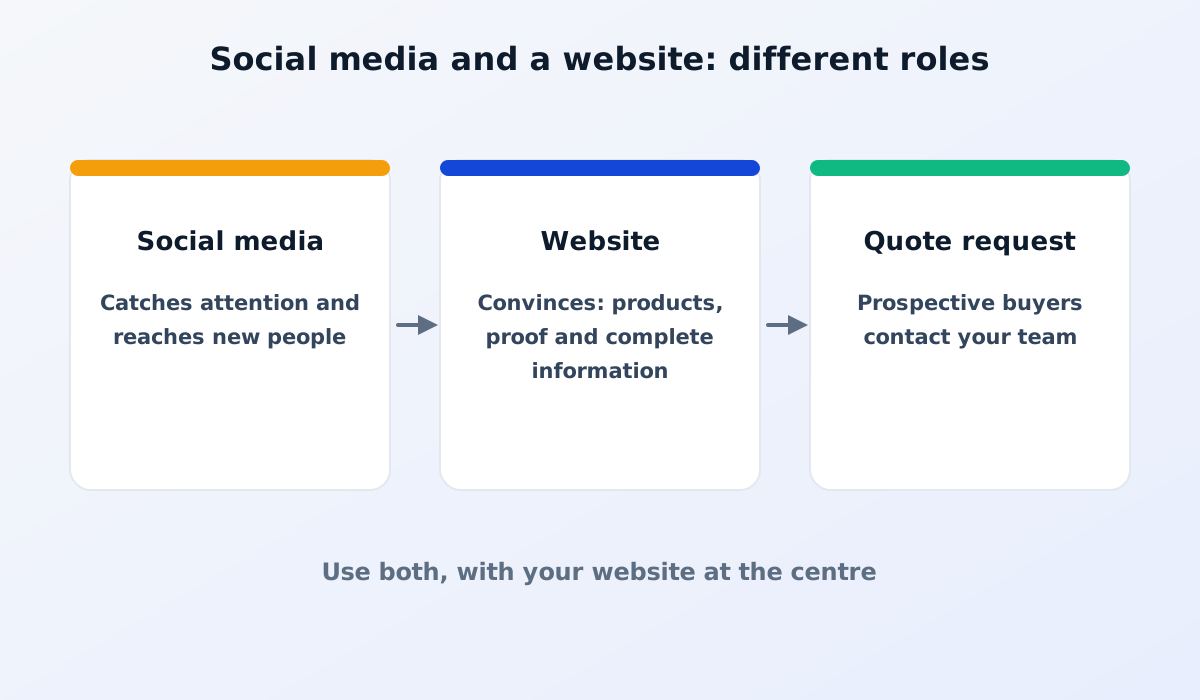
Picture a buyer's journey. They see your post on LinkedIn or Instagram and become interested. Their next step is to look for more detailed information, and that is where the website comes in. On the website, they look at your products, read about your company and send a quote request.
Without a website, the interest sparked on social media often stops halfway. Prospective buyers have to send a message to ask for basic information, and not everyone is willing to do that.
B2B purchasing decisions usually involve several people and large transaction values. Before contacting a supplier, buyers often:
If your company has no website, or its website is not convincing, you can be ruled out before you are ever contacted. One of the pages they check most is the About Us page.
Choose one or two platforms that best match your customers and manage them consistently, rather than being on every platform but rarely posting.
This consistency also helps Google understand that all these accounts belong to the same company.
For a B2B business, start with a clear, informative website, because the website is where buyers make their decision and contact you. After that, use social media to send more people to the website. A good website keeps working for you, even when you are not posting anything. If you are unsure whether one page is enough or you need a full website, read landing page or company website.
A purchasing manager at a food company is looking for a new packaging supplier. They see a LinkedIn post from a packaging factory about eco-friendly packaging. Interested, they open the company profile and click through to the website.
On the website, they find a food industry page, see suitable products with their specifications and read about the factory's certifications. They then share the product page link with their team and send a quote request through the form.
Social media started this journey, but the website completed it.
It isn't essential, but it helps. Social media keeps your company known. If resources are limited, choose the single most relevant platform, such as LinkedIn, and manage it consistently.
Not necessarily. It is more important to make sure the website has complete information and links to your social media accounts. Embedding posts directly can also slow the website down.
Social media makes people aware of you. Your website convinces them to contact you.
Read also how to get your company website on Google, or see our website services.
Quotes for a company website can vary widely. Learn what drives the price and the running costs that are often forgotten before you choose a quotation.
Read the article →
The basic steps for keeping a company website secure: HTTPS, regular updates, strong passwords and 2FA, user access rights, backups and protection from spam.
Read the article →