How Much Does a Company Website Cost? The Factors That Decide the Price
Quotes for a company website can vary widely. Learn what drives the price and the running costs that are often forgotten before you choose a quotation.
Read the article →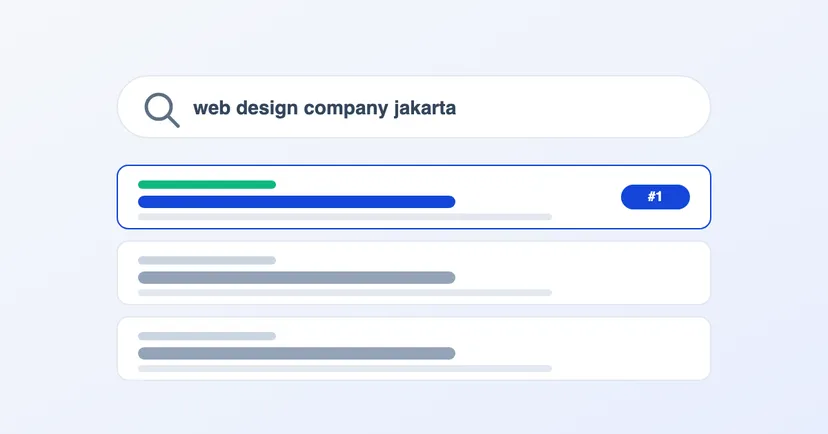
A good website isn't necessarily a website that gets found. If prospective customers can't find your website on Google, it only helps people who already know your company. SEO (Search Engine Optimisation) is the work of getting your website into search results for keywords that are relevant to your business.
SEO is often seen as complicated, but the basics are fairly simple. This article explains the three main pillars of SEO and practical steps you can take.
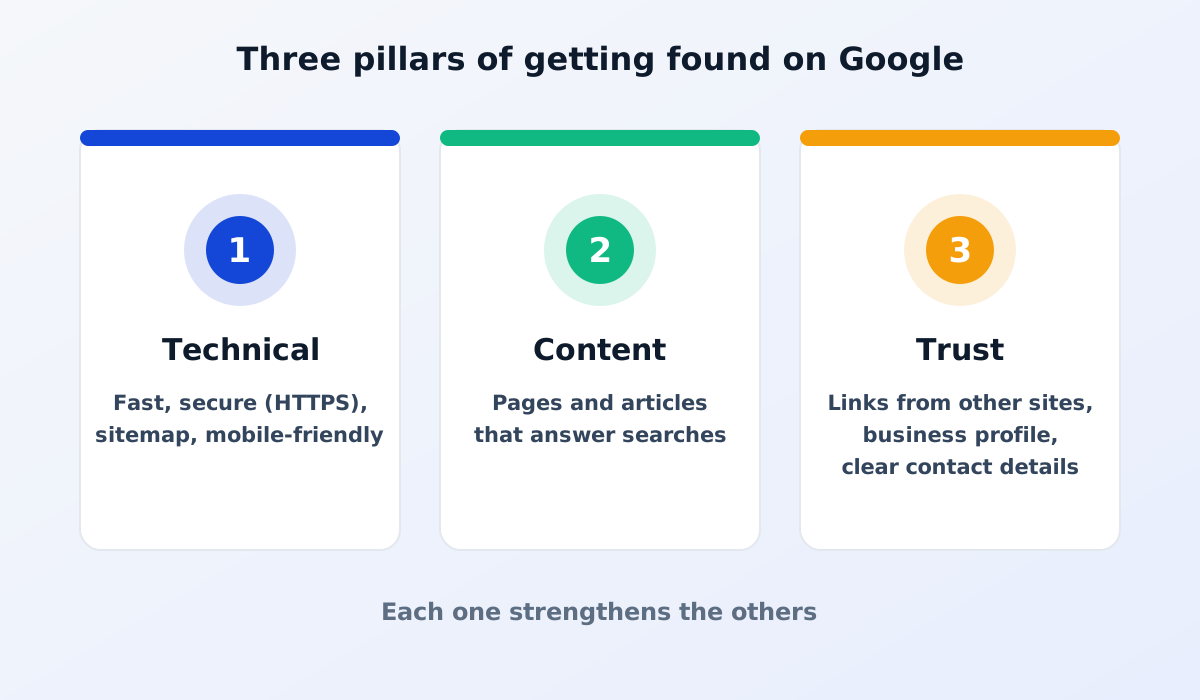
Google needs to be able to read, understand and display your website properly. Some important technical points:
Most of these are set up when the website is built. Ask your website provider whether they are all in place.
Google wants to show the page that best answers the searcher's question. That is why content is the core of SEO.
Think about the words prospective customers type when looking for a service like yours. For example, "company profile website design" or "carton packaging factory Tangerang". Each important page should focus on one main topic or keyword. How to find them from customer questions is covered in keyword research for B2B businesses.
Instead of describing all your services on one page, create a separate page for each service or main product category. That way each page has a chance to appear for more specific searches.
The questions customers ask most often are the best source of article ideas. Articles that genuinely help get searched for, read and shared. Consistency matters more than volume: two good articles every month are better than ten short articles once in a while.
Link related pages together, for example from an article to a service page. Internal links help Google understand the structure of your website and help visitors find other information.
Google trusts websites more when other parties trust them too.
Google Search Console is a free tool from Google for monitoring your website in search results. With it you can:
Search Console data helps you decide which pages need strengthening and which article topics to write next. If a page still isn't showing up, check why a page isn't showing on Google.
SEO is a medium-term investment. A new website usually needs anywhere from a few weeks to a few months to start appearing consistently, depending on how competitive the keywords are. More specific keywords, for example ones that mention a product type or an area, generally deliver results sooner.
If your website has just launched, take these steps:
No. Ordinary (organic) search results can't be bought. Google Ads are paid adverts shown separately with a "Sponsored" label. Ads can help you get visitors quickly, while SEO builds long-term traffic with no cost per click.
Focus on a few main keywords that are most relevant to your business, then expand gradually through service pages and articles. Each page should have one main focus.
Not always. If your old website is already fast, works well on mobile and is easy to update, improving the content and structure may be enough. But if the website is very slow or hard to update, rebuilding is often the more effective option.
Good SEO is basically simple: a fast, tidy website, content that answers customers' questions, and a reputation built consistently.
Want a website that is SEO-ready from day one? See our website services, or read what is a CMS to understand how to update content easily.
Quotes for a company website can vary widely. Learn what drives the price and the running costs that are often forgotten before you choose a quotation.
Read the article →
The basic steps for keeping a company website secure: HTTPS, regular updates, strong passwords and 2FA, user access rights, backups and protection from spam.
Read the article →