Page Titles and Meta Descriptions That Get People to Click
How to write clear page titles and meta descriptions, why Google sometimes replaces them, and how to check the result through CTR in Search Console.
Read the article →
The quote form on your website asks for a name, email address and WhatsApp number. The careers page receives CVs with home addresses and dates of birth. All of that is personal data, and since 2022 Indonesia has had a dedicated law on it: Law Number 27 of 2022 on Personal Data Protection (Undang-Undang Nomor 27 Tahun 2022 tentang Pelindungan Data Pribadi), usually called the UU PDP.
This article covers the basic obligations in the UU PDP that most often touch a company website. It is not legal advice. To assess your own company's situation, talk to a legal adviser.
Under Article 2, the UU PDP applies to every person, public body and international organisation that processes personal data in Indonesia, companies included. The only exclusion is processing by individuals for personal or household activities. A company that decides what the data on its website is used for is called a Personal Data Controller.
The law was promulgated on 17 October 2022. Article 74 allowed at most two years from that date to adjust, so that adjustment period ended in October 2024.
Many companies don't know exactly what data comes in through their website. Make a simple list:
For each line, write down the purpose, who can access it, where it is stored and for how long. This list is the basis for every step that follows.
Article 20 requires a Personal Data Controller to have a basis for processing. That basis can be valid explicit consent, performance of a contract or a data subject's request before entering one, a legal obligation, vital interests, a task in the public interest or for public service, or other legitimate interests. Which basis fits each type of data on your website is a question best answered with a legal adviser.
Where the basis is consent, several provisions apply:
On a website, this usually means a consent box that isn't pre-ticked, a link to the privacy policy next to the submit button, and a record of when consent was given.
The UU PDP gives data subjects a number of rights, including information about the purpose of processing (Article 5), correcting their data (Article 6), access and a copy (Article 7), deletion (Article 8) and withdrawing consent (Article 9). Article 14 says these requests are made through a recorded application, electronically or otherwise.
In practice, provide one clear channel, such as a dedicated email address or form, and name someone to handle it. Log every request and what was done about it. Remember Article 40 too: if consent is withdrawn, processing based on that consent must stop.
Articles 35 to 39 require a Personal Data Controller to protect the security of data, keep it confidential and prevent unauthorised access. For a website, the basics include HTTPS on every page, regular updates, two-step verification for admins and role-based access.
Your website vendor, hosting provider and form services usually process data on your behalf; the UU PDP calls them Personal Data Processors. Article 51 says processing by a processor on your instructions remains your responsibility as controller. So put in the contract what data is processed, for what purpose, and how it is kept secure.
Article 46 provides that if personal data protection fails, the Personal Data Controller must give written notice within 3 x 24 hours at the latest to the data subjects and to the supervisory agency. The notice must at least state the data exposed, when and how it was exposed, and the steps taken to handle and recover from it.
Three days is short. Decide now who makes the call, who writes the notice and who gets contacted. Read also: the first 24 hours after a website is hacked.
Article 53 requires appointing a data protection officer in certain circumstances, for example where core activities require regular and systematic monitoring of personal data on a large scale. In Decision Number 151/PUU-XXII/2024, read out on 30 July 2025, the Constitutional Court ruled that the word "and" in Article 53(1)(b) must be read as "and/or". In other words, those circumstances don't all have to apply at once. Whether your company is covered is a question for your legal adviser.
Several matters in the UU PDP, such as the procedure for sanctions, are left to a Government Regulation. Article 57 says administrative sanctions can range from a written warning, temporary suspension of processing and deletion of data, to a fine of at most 2 percent of annual revenue. The Government Regulation implementing the UU PDP was reported to have been issued in July 2026, taking effect after a transition period. At the time of writing we could not open its official text on the government legal databases, so keep an eye on the official text and ask your legal adviser to assess what it means for your company.
The UU PDP doesn't start with a thick legal document, but with simple questions: what data do we collect, what for, and who looks after it?
We can help on the technical side: tidying up your website's forms, consent, access rights and security. For the legal assessment, involve your legal adviser. Get in touch to talk about your website.
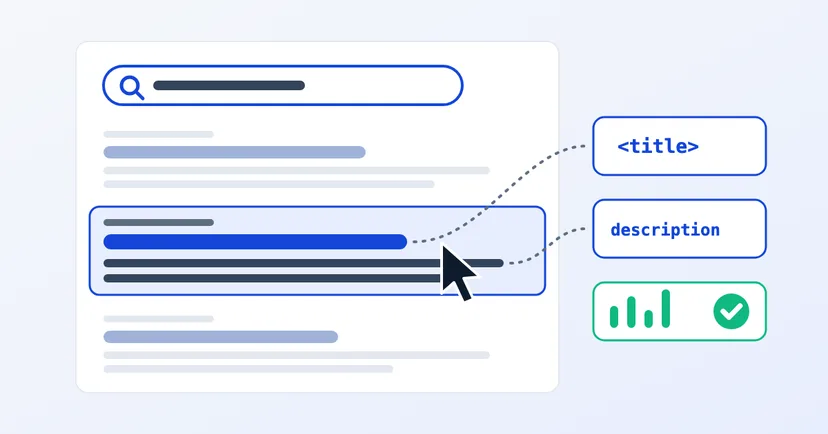
How to write clear page titles and meta descriptions, why Google sometimes replaces them, and how to check the result through CTR in Search Console.
Read the article →
What a privacy policy for website owners in Indonesia must include under UU PDP: the required information, cookies, an honest consent banner, common mistakes.
Read the article →