Page Titles and Meta Descriptions That Get People to Click
How to write clear page titles and meta descriptions, why Google sometimes replaces them, and how to check the result through CTR in Search Console.
Read the article →
Many company websites have a privacy policy copied from a template, sometimes from another company or written for another country's laws. What it says doesn't match what the website actually does. Others show a cookie banner, but the analytics tools keep running even when a visitor clicks "Reject".
This article covers what a company website in Indonesia should have in its privacy policy and cookie settings, with reference to Law Number 27 of 2022 on Personal Data Protection (Undang-Undang Nomor 27 Tahun 2022 tentang Pelindungan Data Pribadi, the UU PDP). It is not legal advice. To draft or review your policy, involve a legal adviser.
The UU PDP sets the principle that personal data is collected in a limited, specific, lawful and transparent way, and processed with notice of its purpose and activities (Article 16(2)). Where the basis for processing is consent, Article 21 requires the Personal Data Controller to give the data subject certain information. On a website, the privacy policy is the natural place to give it.
The services you use may have their own conditions too. The Google Analytics terms of service, for example, require users to post a privacy policy that gives notice of the use of cookies, and to disclose that the website uses Google Analytics and how it collects and processes data.
Article 21(1) of the UU PDP lists the information that must be given when processing is based on consent. The list can serve as the framework for your privacy policy:
Also add what makes the policy usable: the company name and a contact that someone actually reads, other parties that process data (hosting, form services, analytics), how you keep data secure, and the date of the last update. Article 21(2) requires you to notify data subjects before that information changes, so plan how you will do that too.
A cookie is a small file the browser stores at a website's request. Some are needed for the website to work, for example to keep a login session. Others are for analytics or advertising. For example, according to Google's documentation, Google Analytics 4 sets a _ga cookie to distinguish users, with a default lifetime of two years.
The UU PDP doesn't use the word "cookie". But it defines personal data as data about a person who is identified or identifiable, on its own or combined with other information, directly or indirectly. Whether the data from a particular cookie on your website counts as personal data is a question for a legal adviser. Many companies choose to be careful and ask for consent for cookies that aren't strictly necessary.
A cookie banner is only useful if the website behaves according to the visitor's choice. A few practical principles:
A small example from our own website: since 13 October 2026, digimasi.com asks visitors for consent before loading Google Analytics.
A privacy policy isn't a one-off document. Name one person responsible, and review it every time the website changes: a new form, a new analytics tool, a new vendor or a server move. If your website is multilingual, make sure every language version says the same thing and is updated at the same time. Keep records of consent too, because Article 24 requires the Personal Data Controller to be able to show proof of the consent given.
For the wider obligations, read Indonesia's Personal Data Protection Law and your company website. If your website has transactions or user accounts, read also whether your website must register as a PSE.
A good privacy policy isn't the longest one, but the one that most honestly describes what your website does.
We can help on the technical side: listing the cookies and scripts on your website, and making sure tools that aren't strictly necessary only load after the visitor agrees. The policy itself still needs reviewing by your legal adviser. Get in touch.
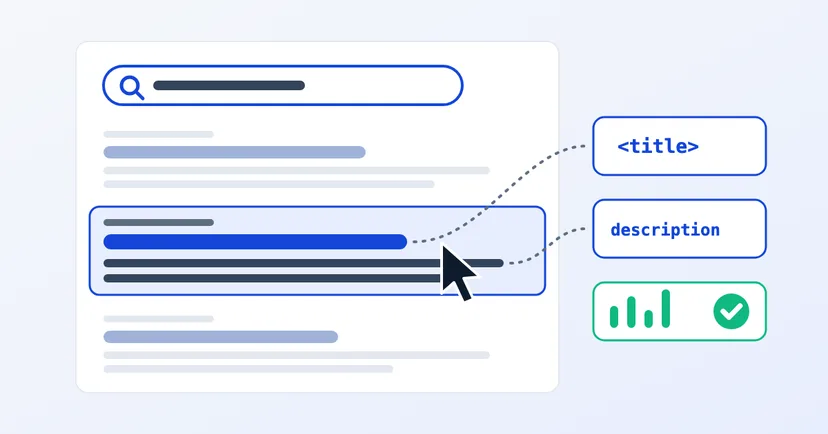
How to write clear page titles and meta descriptions, why Google sometimes replaces them, and how to check the result through CTR in Search Console.
Read the article →
PSE registration in Indonesia under GR 71/2019 and MR 5/2020: who must register, how to assess your company website, registering via OSS, and the sanctions.
Read the article →