How Much Does a Company Website Cost? The Factors That Decide the Price
Quotes for a company website can vary widely. Learn what drives the price and the running costs that are often forgotten before you choose a quotation.
Read the article →
For manufacturers that serve overseas buyers, a website only in Indonesian can be a barrier. Prospective buyers from Singapore, China or elsewhere will trust a website they can understand easily, without having to translate it themselves.
This article covers the benefits of a multilingual website, which languages to choose, how to structure it so it is found on Google, and the mistakes to avoid.
For many companies in Indonesia, the common combination is:
Choose languages based on where your current buyers come from and the markets you want to reach. Two languages that are well looked after are better than five that are never updated.
Each language should have its own address, for example /id, /en and /zh. That way Google can show each searcher the right language version, and visitors can share links to pages in the language they read.
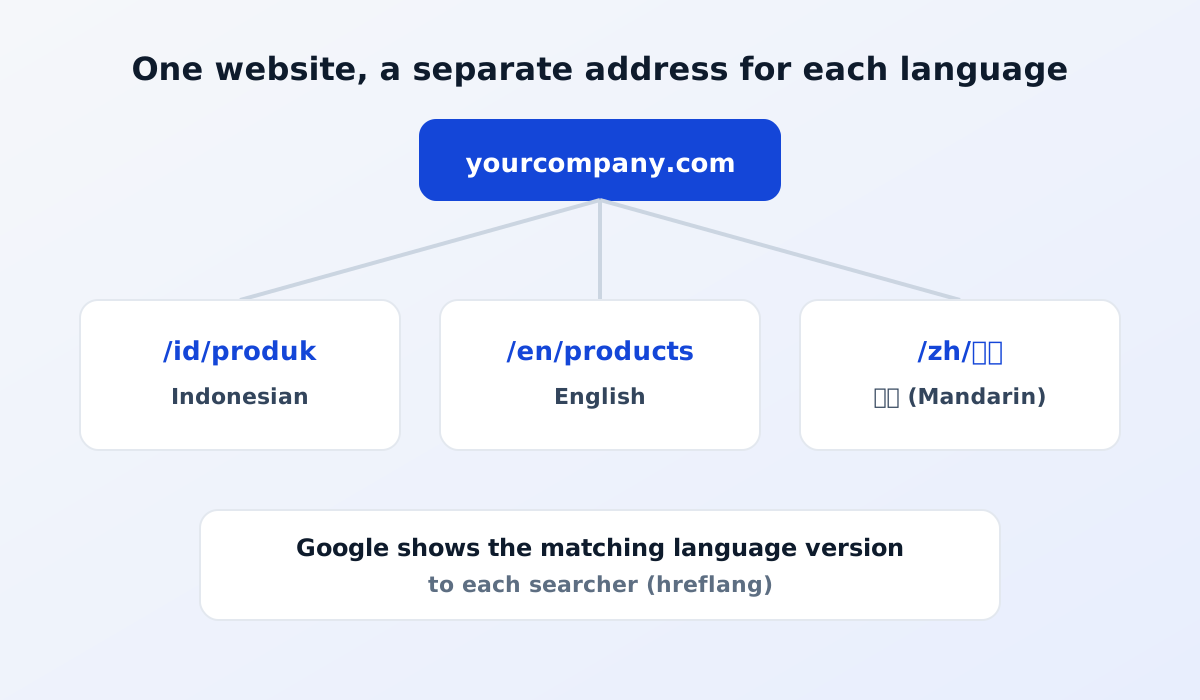
Behind the scenes, each page tells Google about its other language versions through a special tag called hreflang. You don't need to set this up yourself if the website is built properly, but make sure your provider understands it. Other SEO steps for overseas markets are covered in SEO for export websites.
Machine translation can be a starting point, but technical terms such as material names, production processes or sizes must be reviewed by someone who understands them. A wrong term can make buyers misunderstand your product, and in trade, a misunderstanding can end in an order that doesn't match.
A practical approach: prepare a list of terms, or glossary, with the names of products, materials and processes in each language. Use this glossary consistently, both on the website and in your quotation documents.
People search differently in each language. A local buyer might search for "kemasan karton" (Indonesian for carton packaging), an international buyer for "carton box packaging", and a buyer from China in Mandarin. So the title and description of each page should be written for readers of that language, not just translated word for word. Start from buyers' questions in each language, as in keyword research for B2B businesses.
Not all content has to be translated at once. A good CMS shows the primary language when a page's translation isn't available yet, so there are no empty pages. You can start with the most important pages, such as the home page, about us and your main products, then complete the rest in stages.
Use the same terms throughout the catalogue in each language. Consistency makes it easier for buyers to compare products and helps search on your website. Product categories should also follow the same logic in every language, so the website's structure stays tidy.
A multilingual website needs a clear workflow. Decide who writes content in the primary language and who reviews the translations. When adding a new product, complete every language at the same time if possible, or keep a note of pages whose translations are still incomplete so they aren't forgotten.
Once your multilingual website is running, keep an eye on the results. Free tools such as Google Search Console show which countries visitors come from and which keywords they use. This data helps you decide which pages need strengthening, and whether to add another language later.
Also pay attention to the enquiries coming in from overseas buyers. If the same question keeps coming up, add the answer to the product page in that language.
A multilingual website isn't just translated text; it welcomes buyers in their own language.
Want to know more about managing website content? Read what is a CMS.
Quotes for a company website can vary widely. Learn what drives the price and the running costs that are often forgotten before you choose a quotation.
Read the article →
The basic steps for keeping a company website secure: HTTPS, regular updates, strong passwords and 2FA, user access rights, backups and protection from spam.
Read the article →