Week five: the quietest week yet, but backup hunts keep rising
In week five, 75 bot addresses sent 1,519 requests to digimasi.com, the fewest so far. .env was still half, and backup files rose again. Here is the data.
Read the article →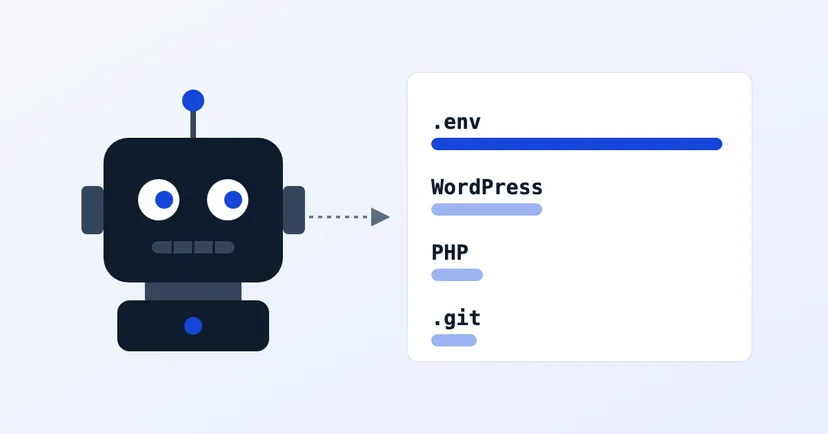
Last week we wrote about the third week of the sensor on digimasi.com: requests jumped and WordPress almost caught up with .env. In week four, from Monday 2 November to Sunday 8 November, the pattern turned around. There were fewer bots and a third fewer requests. But almost as many requests went after .env files as before, so now half of all requests were aimed at them.
Nothing succeeded. The files they asked for do not exist on our website, so every request just got a "not found" page.
For the first three weeks the number of bots kept rising. In week four it fell for the first time. The bots that dropped off most were the ones trying WordPress and PHP. The bots looking for .env kept coming in almost the same numbers. In other words, an exposed .env file stays the main target, in busy weeks and quiet ones.
The networks shifted as well. Google LLC was now the largest (802 requests from 31 addresses), followed by TECHOFF SRV LIMITED (513 from 6 addresses), which sent 1,000 requests from 22 addresses the week before. Then came TC DATACENTER (134 from 8 addresses) and DigitalOcean (125 from 34 addresses). A network name here is the owner of the address block, usually a server or cloud provider. Anyone who rents a server there can use it, so it does not mean the company itself sent the requests.
The Netherlands stayed on top (668 requests from 21 addresses), followed by the United States (305), Belgium (215), Poland (153), Australia (141, from just 3 addresses) and Singapore (137). Australia entered the top ten for the first time, and India came back after the first week.
You can check all of this yourself in five minutes, on a website you own:
We only observe. All data comes from bots that came to digimasi.com on their own; we never scan anyone else's website, and we do not show IP addresses here. Addresses that clearly attack us are reported to AbuseIPDB. The full method is on the methodology page, and each week's numbers are in the weekly record.
Data: Digimasi security research, weekly sensor record (https://doi.org/10.5281/zenodo.23655270).
We will keep recording and comparing the results week by week.
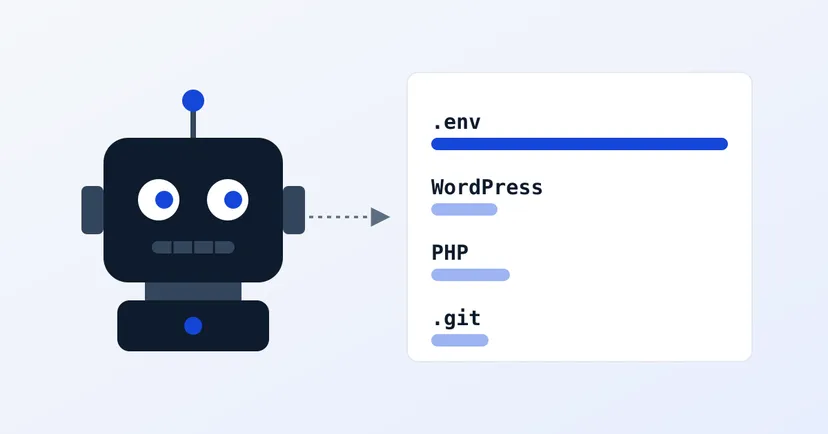
In week five, 75 bot addresses sent 1,519 requests to digimasi.com, the fewest so far. .env was still half, and backup files rose again. Here is the data.
Read the article →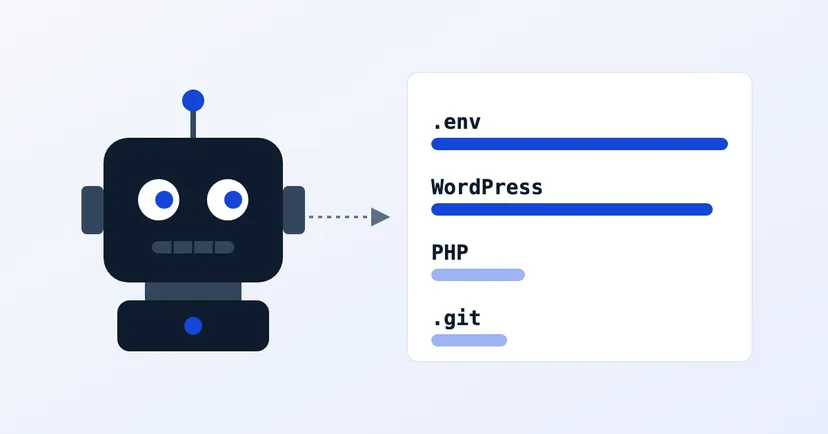
In week three, 179 bot addresses sent 2,976 requests to digimasi.com. WordPress rose again and almost matched .env. Here is the data, and what to check.
Read the article →